


2020 Vol. 34, No. 3
Display Method:
2020, 34(3): 3-15.
Abstract:
With the advent of the era of big data and the rapid rise of the digital technology revolution, enterprise’s data resources are qualified to be recognized as assets. Therefore, how to treat data assets in the enterprise financial accounting system and how to present the information have become important problems to be solved. To begin with the reason for the data resource to be recognized as an asset, this research further improves the definition, summarizes the characteristics, and analyzes the application features of data asset in enterprises, so that proposes an accounting treatment method using data assets classification standards independent from the current intangible assets accounting system, and a model of information presentation, which is mainly composed of the data information formatted report, statement note disclosure and text disclosure. This research provides a reference for enterprises to effectively deal with data asset and information disclosure, which benefits for developing the value discovery function of accounting information and reducing the internal and external information asymmetry.
With the advent of the era of big data and the rapid rise of the digital technology revolution, enterprise’s data resources are qualified to be recognized as assets. Therefore, how to treat data assets in the enterprise financial accounting system and how to present the information have become important problems to be solved. To begin with the reason for the data resource to be recognized as an asset, this research further improves the definition, summarizes the characteristics, and analyzes the application features of data asset in enterprises, so that proposes an accounting treatment method using data assets classification standards independent from the current intangible assets accounting system, and a model of information presentation, which is mainly composed of the data information formatted report, statement note disclosure and text disclosure. This research provides a reference for enterprises to effectively deal with data asset and information disclosure, which benefits for developing the value discovery function of accounting information and reducing the internal and external information asymmetry.
Does Media Attention Inhibit Managers’ Catering Behavior of Investment? A Perspective of Agency Cost
2020, 34(3): 16-35.
Abstract:
From the perspective of agency cost, we empirically examine the effect of media attention on managers’ catering behavior of investment and its mechanisms. We find that media attention significantly inhibits managers’ catering behavior of investment, in particular the investment expansion due to stock overvaluation. The effect of media attention is more significant for managers with stronger motivations of equity-based compensation and private benefit of control rights. We also find that the inhibiting effect plays through governance mechanism rather than reputation mechanism. Moreover, the inhibiting effect is more significant in firms with higher information asymmetry and higher agency costs, and is mainly from authoritative and policy-oriented media. Finally, we find that media attention significantly inhibits the overinvestment due to stock overvaluation, and improves the investment efficiency in general. In conclusion, our findings suggest that media plays a positive governance role in inhibiting managers’ catering behavior of investment originated from self-benefit motivation, and thus improves the efficiency of resource allocation.
From the perspective of agency cost, we empirically examine the effect of media attention on managers’ catering behavior of investment and its mechanisms. We find that media attention significantly inhibits managers’ catering behavior of investment, in particular the investment expansion due to stock overvaluation. The effect of media attention is more significant for managers with stronger motivations of equity-based compensation and private benefit of control rights. We also find that the inhibiting effect plays through governance mechanism rather than reputation mechanism. Moreover, the inhibiting effect is more significant in firms with higher information asymmetry and higher agency costs, and is mainly from authoritative and policy-oriented media. Finally, we find that media attention significantly inhibits the overinvestment due to stock overvaluation, and improves the investment efficiency in general. In conclusion, our findings suggest that media plays a positive governance role in inhibiting managers’ catering behavior of investment originated from self-benefit motivation, and thus improves the efficiency of resource allocation.

2020, 34(3): 36-49.
Abstract:
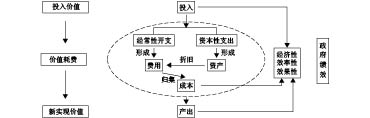
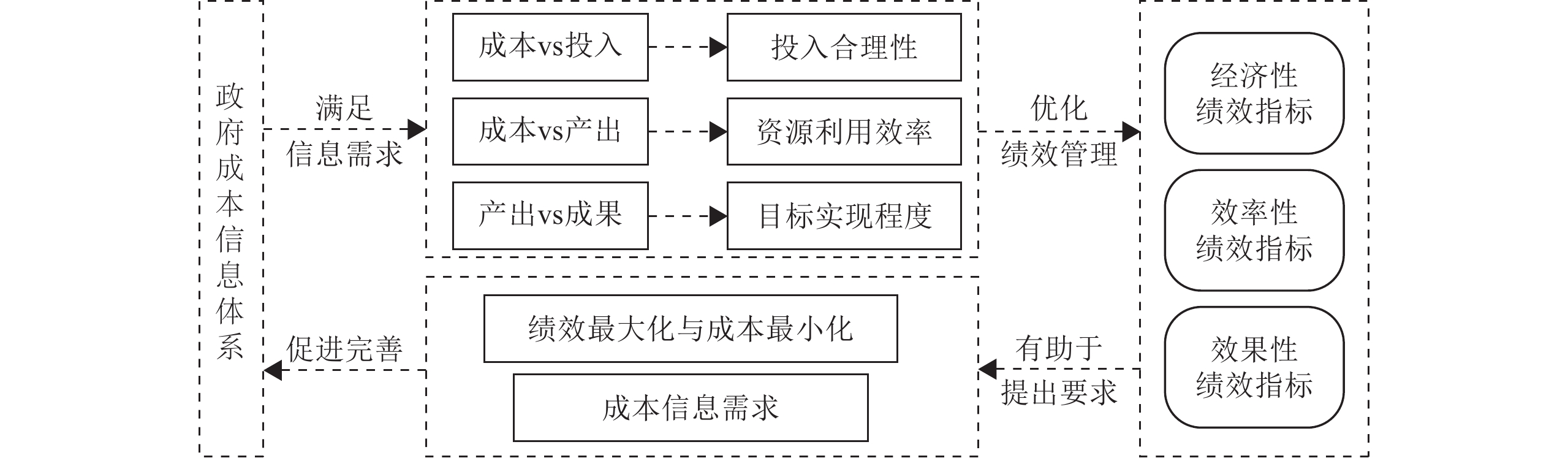
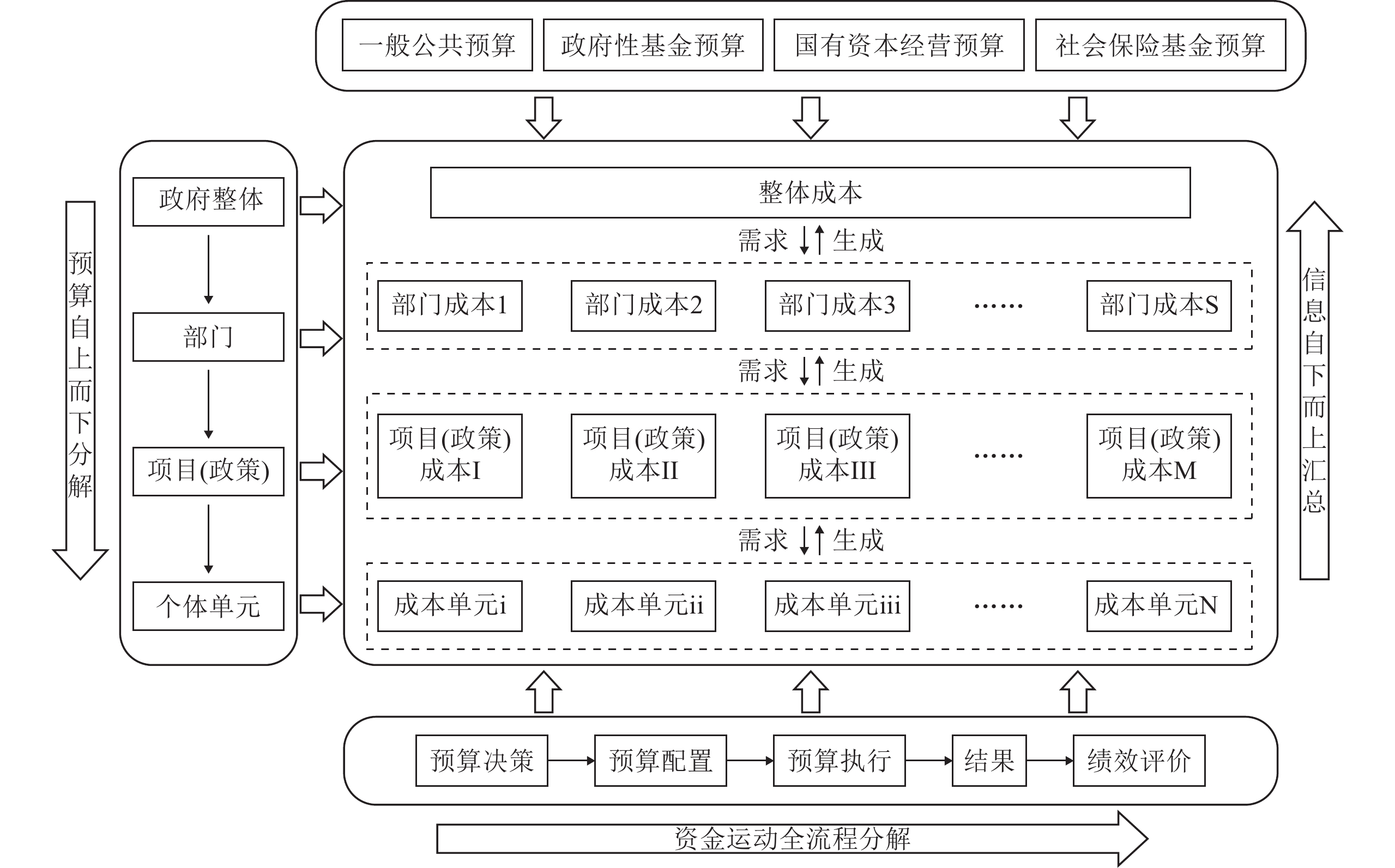
The comprehensive implementation of budget performance management puts forward new requirements for government cost accounting information. Based on the objective requirements of the government budget performance evaluation theory and policy, considering the particularity of the relationship between government organization performance and cost, combining with the diversified performance evaluation objectives, subdividing the corresponding cost calculation units, and comprehensively integrating the information needs of performance management featuring all-round, all-process and all-coverage, this paper establishes a hierarchical and cross government cost accounting information system, and realizes the effective integration between budget performance management and government cost accounting information system.
The comprehensive implementation of budget performance management puts forward new requirements for government cost accounting information. Based on the objective requirements of the government budget performance evaluation theory and policy, considering the particularity of the relationship between government organization performance and cost, combining with the diversified performance evaluation objectives, subdividing the corresponding cost calculation units, and comprehensively integrating the information needs of performance management featuring all-round, all-process and all-coverage, this paper establishes a hierarchical and cross government cost accounting information system, and realizes the effective integration between budget performance management and government cost accounting information system.
2020, 34(3): 50-67.
Abstract:
Based on the theory of compensation justification, this paper examines whether excessive compensation of senior executives of listed firms in China affects their information disclosure motivation, and thus leads to the change of the comparable level of accounting information disclosed publicly. The result shows that the higher the level of excessive compensation of senior executives, the lower the accounting information comparability, and this negative relationship is (not) significant in (state-owned) non-state-owned firms after distinguishing the nature of property right. Further study finds that institutional investors and analysts tracking, which play a role in corporate governance can effectively restrain the negative effect of excessive compensation of senior executives in non-state-owned firms on the accounting information comparability.
Based on the theory of compensation justification, this paper examines whether excessive compensation of senior executives of listed firms in China affects their information disclosure motivation, and thus leads to the change of the comparable level of accounting information disclosed publicly. The result shows that the higher the level of excessive compensation of senior executives, the lower the accounting information comparability, and this negative relationship is (not) significant in (state-owned) non-state-owned firms after distinguishing the nature of property right. Further study finds that institutional investors and analysts tracking, which play a role in corporate governance can effectively restrain the negative effect of excessive compensation of senior executives in non-state-owned firms on the accounting information comparability.
2020, 34(3): 68-80.
Abstract:
The term structure of credit has an important effect on firm performance. Strengthening the medium and long-term credit support for non-financial firms is an important means to improve firm performance. In this paper, firm leverage ratio is included in the analysis on the relationship between medium and long-term credit and firm performance. The results show that: Firstly, when the firm leverage ratio is in the middle and low range, medium and long-term credit can significantly improve firm performance, but when the leverage ratio is too high, the role of medium and long-term credit in improving firm performance is weakened, and in the middle and high leverage ratio range, providing medium and long-term credit support for private firms can better improve their performance. Secondly, as time goes on, the promoting effect of medium and long-term credit on firm performance weakens. Thirdly, at a certain level of leverage ratio, there is a significantly inverted U relationship between medium and long-term credit and firm performance, and this inverted U relationship is more significant in small and medium-sized firms, private firms and high-growth firms.
The term structure of credit has an important effect on firm performance. Strengthening the medium and long-term credit support for non-financial firms is an important means to improve firm performance. In this paper, firm leverage ratio is included in the analysis on the relationship between medium and long-term credit and firm performance. The results show that: Firstly, when the firm leverage ratio is in the middle and low range, medium and long-term credit can significantly improve firm performance, but when the leverage ratio is too high, the role of medium and long-term credit in improving firm performance is weakened, and in the middle and high leverage ratio range, providing medium and long-term credit support for private firms can better improve their performance. Secondly, as time goes on, the promoting effect of medium and long-term credit on firm performance weakens. Thirdly, at a certain level of leverage ratio, there is a significantly inverted U relationship between medium and long-term credit and firm performance, and this inverted U relationship is more significant in small and medium-sized firms, private firms and high-growth firms.
2020, 34(3): 81-95.
Abstract:
The cross study of government regulation on macro level and corporate behavior on micro level is a hot topic of recent academic research, which has a strongly practical significance for localized cross study between government regulation and corporate behavior. This paper reviews literatures in this field mainly from the aspects of financial regulation, capital market regulation, compensation regulation and other intervention behavior, and also proposes corresponding research prospects.
The cross study of government regulation on macro level and corporate behavior on micro level is a hot topic of recent academic research, which has a strongly practical significance for localized cross study between government regulation and corporate behavior. This paper reviews literatures in this field mainly from the aspects of financial regulation, capital market regulation, compensation regulation and other intervention behavior, and also proposes corresponding research prospects.
2020, 34(3): 96-113.
Abstract:
This paper uses panel data of 30 provinces except Tibet from 2006 to 2015 to test the economic effect of public education expenditure structure on industrial labor productivity, and identifies the influence channels of various public education expenditure from the perspective of human capital accumulation. The result shows that the growth effect of compulsory education expenditure on the whole industry is mainly manifested as a direct impact, but the positive impact is weakened on capital intensive industry as the human capital level improves. The secondary education mainly drives the growth of the whole industry through the intermediary effect of human capital. The influence channel of higher education expenditure lies in both the intermediary effect and the adjustment effect of human capital on the whole industry. However, these two effects are opposite, and the final manifestation is the uncertainty of the impact on industrial labor productivity. This paper suggests that we should improve the quality of higher education investment, and the efficiency of higher education expenditure to promote the great development of Chinese industry, and avoid the industrial hollowing out caused by industrial upgrading.
This paper uses panel data of 30 provinces except Tibet from 2006 to 2015 to test the economic effect of public education expenditure structure on industrial labor productivity, and identifies the influence channels of various public education expenditure from the perspective of human capital accumulation. The result shows that the growth effect of compulsory education expenditure on the whole industry is mainly manifested as a direct impact, but the positive impact is weakened on capital intensive industry as the human capital level improves. The secondary education mainly drives the growth of the whole industry through the intermediary effect of human capital. The influence channel of higher education expenditure lies in both the intermediary effect and the adjustment effect of human capital on the whole industry. However, these two effects are opposite, and the final manifestation is the uncertainty of the impact on industrial labor productivity. This paper suggests that we should improve the quality of higher education investment, and the efficiency of higher education expenditure to promote the great development of Chinese industry, and avoid the industrial hollowing out caused by industrial upgrading.
2020, 34(3): 114-128.
Abstract:
The impact of tax incentives on enterprise innovation has always been the focus of academic research. Following the logical thinking of ‘action path-policy effect-influencing factors’, this paper reviews relevant domestic and foreign literatures and finds that current literatures mainly focus on the impact of tax incentives on enterprise innovation from different perspectives and the internal and external factors that lead to changes of policy effects, and then show phased characteristics and trends. The follow-up study could further explore the mechanism of tax incentives, dig deeper into the policy effect of internal and external factors and the effects of specific type of policy, and continue focusing on the dynamic changes in foreign tax policies.
The impact of tax incentives on enterprise innovation has always been the focus of academic research. Following the logical thinking of ‘action path-policy effect-influencing factors’, this paper reviews relevant domestic and foreign literatures and finds that current literatures mainly focus on the impact of tax incentives on enterprise innovation from different perspectives and the internal and external factors that lead to changes of policy effects, and then show phased characteristics and trends. The follow-up study could further explore the mechanism of tax incentives, dig deeper into the policy effect of internal and external factors and the effects of specific type of policy, and continue focusing on the dynamic changes in foreign tax policies.


 Email alert
 RSS