During the Ming and Qing dynasties, many merchant families not only pursued commercial success but also emphasized Confucian education for their descendants, gradually evolving into Confucian merchant families. The formation mechanisms of such families warrant attention. The education-related records preserved in the
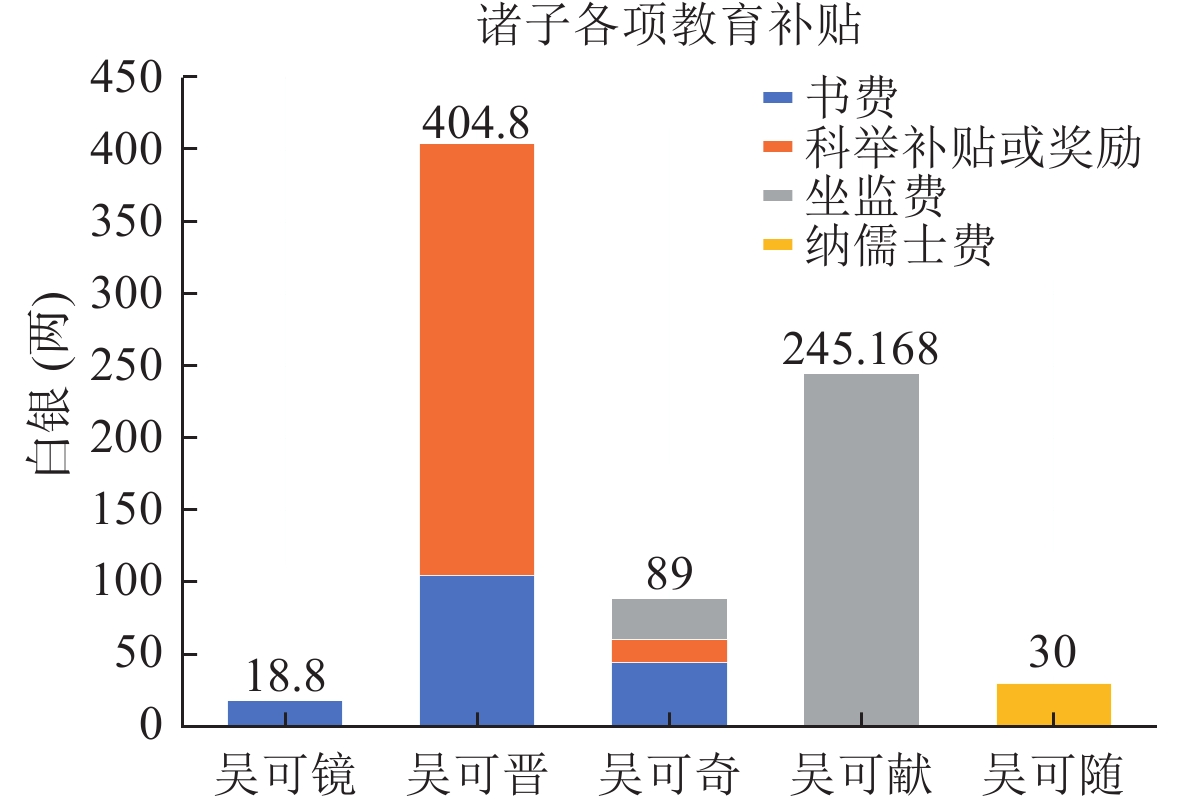
Wanli Income and Expenditure Ledger of the Wu Wenkui household, a Huizhou merchant in the Ming dynasty provide valuable historical material for examining this issue. The study finds that the Wu Wenkui household did not simply treat educational expenses for descendants as daily costs. Instead, through dedicated allocations, interest accruals, and balance rollovers, they incorporated educational funds into the family’s capital cycle, transformed them into sustainable and accumulative educational capital, and formed a sustained operating mechanism of “account-returns-allowance-rollover”, reflecting the capitalization of educational funds. The distribution of educational resources was not evenly applied but was closely linked to the academic abilities, examination prospects, and family roles, thereby facilitating the internal division between scholarly and commercial pursuits and the allocation of resources, and creating a mutually supportive relationship between commerce and scholarship. Compared with educational support arrangements such as lineage school lands and literary association lands, the Wu family case more clearly reveals how merchant households utilized accounting records and financial management to plan educational investments, reflecting the accounting logic through which Ming Dynasty Huizhou merchants integrated commercial returns, educational investment, and family governance. This case not only helps to explain the formation process of Confucian merchant families, but also provides a micro-level perspective for research on modern family governance and succession, rational elements in Confucian ethics, and comparative studies of accounting practices in Chinese and Western merchant households during the same period.



 DownLoad: